
Irvine Heat Wave – Aeoniums React

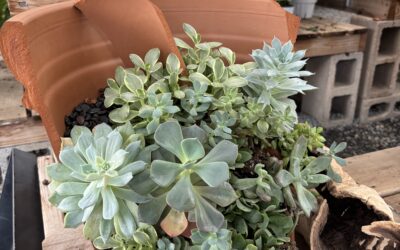
All plants have their preferred climates. The majority of succulents are native to South Africa and the Mediterranean,  while they can tolerate droughts, they do not thrive in them. Desert loving cactus will thrive through extreme temperatures, blazing hot sun, and long periods of drought, but the softer succulents that we know and love don’t like to be kept in baking hot areas. We often field questions about a plants ability to take “full sun”, or “afternoon sun”, and the answers are always different. There are many more variables than time of day alone. Full sun on the coast is different than full sun in the valley. A good rule of thumb, if it is a new plant, or a new area, is to test it before planting a large group, or ease a plant into a new area. Many plants grow up facing one direction for the duration of their life and the simple task of planting a plant facing the opposite direction can result in a fatal burn. When we move large, specimen, pieces, we cover the plant with shade cloth in an effort to acclimate it to its new location. It may not be the most beautiful site in a backyard, but just a couple of days under some shade could save a one of a kind Aloe Dichotoma from never recovering. Pick up some shade cloth, and be careful adding new plants to new locations. Photo is of Crassula ‘Silver Dollar’, a variety of jade that CAN tolerate more heat than some of its softer counterparts.
More Succulent Tips

Graptopetalum Paraguayense (Ghost Plant)

Graptopetalum paraguayensis , or the "ghost plant", is a great, trailing, wandering, ground cover. We love the colors that this plant brings out in a design, complementing the blues, pinks, and purples that so many of the gorgeous succulents have to offer. Each plant...

Anacampseros Sunrise

The love plant, or Anacampseros Telephiastrum Variegata ‘Sunrise’, is a marvelous plant for containers. Pair easily with the Echeveria ‘Lola’ for similar slow growing, compact, container design, or use it to brighten up a Bromeliad container. These smaller succulents...

Sedum Morganium (Donkey’s Tail)

Sedum Morganium, more commonly known as the “Donkey’s Tail” can be thought of as a common plant. Here at Orange County Succulents we pride ourselves in doing the common, uncommonly well. To an untrained eye a donkeys tail is a donkeys tail, but to us we see so much...

Medicinal Aloe

Graptopetalum paraguayensis , or the "ghost plant", is a great, trailing, wandering, ground cover. We love the colors that this plant brings out in a design, complementing the blues, pinks, and purples that so many of the gorgeous succulents have to offer. Each plant...

Agave Gypsophila

The Fan Aloe, or Aloe Plicatilis, is an extremely branching, highly variable, and thus exceedingly unique plant. Growing as a multi branched shrub, or even a small tree, with specimens reaching 10’-15’ tall! Each stem has its own cluster of individual leaves that run...

Cordyline Australis ‘Sunrise’

Cordyline Australis, or the new zealand cabbage tree, is a plant that can grow upwards of 20’ with many branching arms. While ‘sunrise’ will most likely grow slower it still may achieve that 10’+ height with branches. The linear burgundy red leaves have a pink margin...

Tiny But Mighty: Benefits of 4-Inch Houseplants

Why Small Plants Pack a Big Punch When you think of houseplants, large monstera leaves and towering fiddle-leaf figs may come to mind. But not everyone has the space (or patience) to care for giant plants. That’s where 4-inch houseplants shine! These miniature green...

The Best Indoor Plants to Give as Gifts

What holiday gift doubles as an air purifier and a work of art and has scientifically-proven mood-boosting powers? It’s houseplants! There are literally thousands to choose from, but we’ve narrowed it down to the top 6.

Rooted in Love: Mother’s Day Plant Picks

At OC Succulents, we know that plants and moms have a lot in common — they nurture, grow, and make life more beautiful. This Mother’s Day, we’re sharing plant picks for every kind of mom, along with heartfelt stories from the incredible moms on our own team. 💐 For the...

Century Plant Agave Americana

The Century Plant, Blue Agave, or Agave Americana, are some of the largest in the agave family and are recognizable anywhere. Comically named the century plant, it truly only lives 10 - 30 years. The large sword shaped, gray-green leaves spread open in a rosette up to...

Visit Us Today

Want to Learn more?

More Plant Parenting Advice

Visit Us Today

Want to Learn more?