
Sedum Nussbaumerianum – Coppertone Stonecrop

Sedum Nussbaumerianum - Coppertone Stonecrop, a succulent.

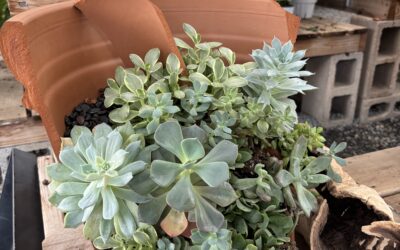
Graptopetalum paraguayensis , or the “ghost plant”, is a great, trailing, wandering, ground cover. We love the colors that this plant brings out in a design, complementing the blues, pinks, and purples that so many of the gorgeous succulents have to offer. Each plant has its own unique coloring and shades to offer. It’s extreme hardiness and coloring make it an incredibly versatile plant. We’ve seen it used as a sprawling ground cover, mounding up and filling in entire planters, or for spot color in the smallest of arrangements. Something overlooked, or sometimes unknown about succulents, is that stress brings out their best color. It’s often a combination of factors that causes the stress and each succulents vibrance, but colder temperatures, less water, and more sun, are the big three factors that come into play. Most succulents, in full sun, in the winter, receiving just the right amount of water, will have the best color here in Southern California. With that being said, there is no “one size fits all” answer to bringing out the best color in each plant. Experiment, tweak, and enjoy playing with your succulents.
More Succulent Tips

Bromeliads

Graptopetalum paraguayensis , or the "ghost plant", is a great, trailing, wandering, ground cover. We love the colors that this plant brings out in a design, complementing the blues, pinks, and purples that so many of the gorgeous succulents have to offer. Each plant...

Euphorbia Leucodendron – Cat Tails

More architechtual than its more wild counter part, Euphorbia Tirucalli, the Euphorbia Leucodendron has thicker, more erect, and less bushy branches. We like the use of these euphorbia as small shrubbing barriers as it grows only to 4’ tall in containers. The...

Aptenia Cordifolia Variegata

While many succulents grow into large tree like specimens, or never get much bigger than their original size, some grow on and on and are ideal ground covers for both drought tolerant and tropical gardens. Their are many families of succulents, but the crassula,...

Hybrid Aloes

A little bit about Aloes and their hybrids. The vast majority of aloes, over 125 species, come from South Africa, the remaining from Southwest Asia and Madagascar. Currently, there are almost 500 different species, with many over the last few years being hybrids. Only...

Fire & Ice

Echeveria Subrigida, “Fire and Ice”, isn’t the most common echeveria, but one we love greatly. In optimal conditions the plant will grow up to 18” wide and with its soft, deeply canyoned leafs, it offers the same rosette forming quality of aboutique agave with none of...

Echeveria Lola

Slow growing, highly collectible, iridescent color, great container accent, easily one of the most sought after echeveria we grow. Not many succulents are white, but a white echeveria like ‘lola’ can work in almost an arrangement. Lola, a hyrbid of Dick Wright,...

Plants That Store Water

What are succulents? Succulents are plants that store water in their leaves, stems, and even roots. It also gives them a more swollen, or fleshy appearance. In fact, the term succulence is specifically given to these plants for this ability. We can also typically...

Contemporary Succulents

Contemporary gardens are becoming more and water wise and are more appealing for their easy-care. The gardens contain lots of stone, wood, and bold containers with architectural plants. The plants, not used as lushly, stand out even more. The clean lines of the...

Why Drought-Tolerant Plants Are a Smart Wholesale Choice

If your business is in the landscaping, retail, or design space, offering drought-tolerant plants wholesale can set you apart. These water-wise plants are not only resilient and eco-friendly—they’re in high demand. At CGH Succulents, we specialize in providing...

Sedum Pachyphllum (Jelly Beans)

A cute and playful sprawling succulent from Mexico. It won’t grow much over a foot tall before crippling over by it’s own weight. Easily roots from fallen leaves, and as it spreads each stem forms roots and becomes it’s own mother plant. The small jelly bean like...

Visit Us Today

Want to Learn more?

More Plant Parenting Advice

Visit Us Today

Want to Learn more?