
Sencio Barbertonicus & Vitalis

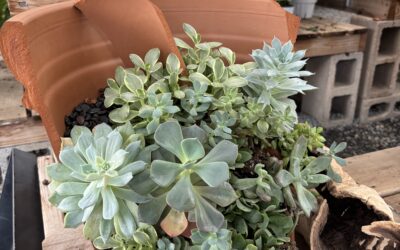
Senecio Barbertonicus, the more green of the two, is native to Southern Africa and found in a number of states. All of which have similar climates of being hot and dry, having occasional summer rain, long periods of drought, and temperatures near freezing through the winter. Senecio Vitalis, the more blue of the two, is native to an area of South Africa that is a transition between two climate changes. One receives winter rain, the other summer, because of this the plant responds exceptionally well with summer irrigation, but can also tolerate a good amount of water in the winter if in a well draining soil. Barbertonicus and Vitalis are both members of the “finger leaved” senecio’s and amongst the largest. Unlike the sprawling “Blue Chalksticks”, Senecio Mandraliscae, they grow upright, 3’+, and are more shrub like in nature than ground cover. Both varieties are great for medium height in a landscape, or as an upright plant in a container.
More Succulent Tips

Top-Selling Plants: Employee Picks You Should Be Stocking

When it comes to choosing the right plants for your inventory, no one knows what’s trending better than the people who live and breathe greenery every day—our plant buyers. We asked our in-house experts to share their current favorites, and their selections are not...

Aloe Hybrid Sunset at sunset

As promised, a photo of the Aloe Hybrid Sunset at Sunset. There are well over 500 cultivars of aloe, many of which are recent hybrids, and more often than not, we the growers, can’t tell them apart. But this aloe, Hybrid Sunset, is a remarkable hybrid. Kelly Griffin,...

Bring These Houseplants Outside for Summer Garden Decor

If you want your outdoor patio all decked out for summer (pun intended), you don’t have to rely exclusively on short-lived annual plants for bringing color to the scenery. A lot of your favorite houseplants can be brought outside the house for summer. Just like us,...

Century Plants

A common misconception about agave is that they flower every 100 years. “The Century Plant” is the common name given to Agave Americana, and some of its variegated counter parts, Agave Americana Variegata, and Agave Americana Medio-Picta ‘Alba’ are just a couple. The...

Elephant Bush Flowers

Nearly all plants flower. Trees, shrubs, vines, and even weeds produce flowers. However, in many cases, it takes many years for a plant to reach a flowering maturity and can be an uncommon sight. The flowers on the portulacaria afra, or “Elephants Food” (because in...

Tree Aloes – Aloe Thraskii

Aloe is an enormous genus containing well over 500 different species and it can be quiet overwhelming, but the beauty of this large genus, native to Africa, is that it is so vast. There are endless applications for aloes and one of the toughest things to do in a...

Kalanchoe Orgyalis Copper Spoons

The golden bronze leaves on this Kalanchoe give it the same finish as a new copper penny. Branching, succulent shrub that if given the proper conditions can reach up to 6’ tall. They way this plant gets its name is almost as interesting as the plant itself. Kalanchoe...

Sedum Morganium (Donkey’s Tail)

Sedum Morganium, more commonly known as the “Donkey’s Tail” can be thought of as a common plant. Here at Orange County Succulents we pride ourselves in doing the common, uncommonly well. To an untrained eye a donkeys tail is a donkeys tail, but to us we see so much...

Bromeliads

Graptopetalum paraguayensis , or the "ghost plant", is a great, trailing, wandering, ground cover. We love the colors that this plant brings out in a design, complementing the blues, pinks, and purples that so many of the gorgeous succulents have to offer. Each plant...

Aloe Hybrid Sunset

Lighting is everything with viewing some of these new cultivars. A photo taken during the middle of the day, versus at sunset, can produce two distinctly different plants. Agave Blue Glow is a terrific example of how different viewing times can lend different...

Visit Us Today

Want to Learn more?

More Plant Parenting Advice

Visit Us Today

Want to Learn more?